Women are represented in all different ways throughout diverse mediums, but there is one thing that is often present throughout these various genres.
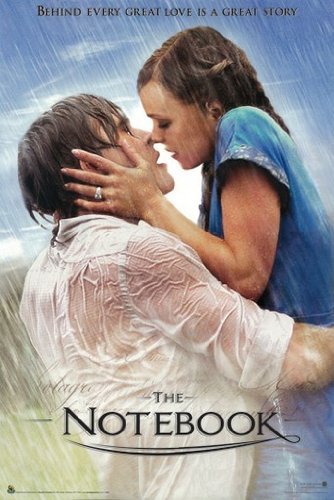


In these sorts of movies, the focus is mainly on the relationship between characters and it's not an issue that a female love interest is constant throughout the genre.
The real issue lies in movies with a strong female lead that harbour romantic themes when the lead is turned into a love interest. The problem with this is that the romance attributed to the character leaves no room for important character traits that strengthen and define the female character's independence. In these types of movies it is extremely important that the character's features are retained and are in place to fit the plot and theme. When these features are removed, it leaves the character as nothing but an object in place for romantic attraction.
Examples of this are the Hunger Games Trilogy, Lara Croft: Tomb Raider, Divergent and even Harry Potter.


In The Hunger Games, Katniss Everdeen is a firm woman who is able to hunt for herself and even volunteers to enter the hunger games over her younger sister. Despite this healthy representation, the female lead finds herself caught in a love triangle with her childhood friend Gale and her new acquaintance Peeta. This causes a thrilling action trilogy to morph into a love story similar to that of non-critically acclaimed movies like Twilight.

Even in the famous Harry Potter series, almost all the female characters are eventually represented as lovers for the male characters. One obvious example is Hermione, who in the end of the series does end up with one of the male leads. Even though this is an obvious example, there are also many more female love interests throughout the series such as Padma and Parvati Patil as Yule Ball dates for both male leads, Cho Chang as a brief crush and Ginny as Harry's eventual girlfriend.
This representation of women is much more common than one might think, but it is important that it's much less incessent than in previous decades. Despite this, it is still an issue that should be talked about more often and possibly taken to the point where a change is made.
I'm looking forward to continuing in this course and delving deeper into both positive and negative representations of women throughout different mediums.
Women are almost always made a love interest.
Whether it's a rom-com movie, a billboard, an adventure novel or a magazine cover, the frequency of this representation is uncanny. A focus on popular movies is important to gain an insight on how often this representation is actually used on a large scale.
It's obvious that movies that fit into the romantic genre will have a female love interest. A female love interest role can be seen in movies such as The Notebook, Sleepless in Seattle, When Harry Met Sally or Titanic.
In these sorts of movies, the focus is mainly on the relationship between characters and it's not an issue that a female love interest is constant throughout the genre.
The real issue lies in movies with a strong female lead that harbour romantic themes when the lead is turned into a love interest. The problem with this is that the romance attributed to the character leaves no room for important character traits that strengthen and define the female character's independence. In these types of movies it is extremely important that the character's features are retained and are in place to fit the plot and theme. When these features are removed, it leaves the character as nothing but an object in place for romantic attraction.
Examples of this are the Hunger Games Trilogy, Lara Croft: Tomb Raider, Divergent and even Harry Potter.
In The Hunger Games, Katniss Everdeen is a firm woman who is able to hunt for herself and even volunteers to enter the hunger games over her younger sister. Despite this healthy representation, the female lead finds herself caught in a love triangle with her childhood friend Gale and her new acquaintance Peeta. This causes a thrilling action trilogy to morph into a love story similar to that of non-critically acclaimed movies like Twilight.
Even in the famous Harry Potter series, almost all the female characters are eventually represented as lovers for the male characters. One obvious example is Hermione, who in the end of the series does end up with one of the male leads. Even though this is an obvious example, there are also many more female love interests throughout the series such as Padma and Parvati Patil as Yule Ball dates for both male leads, Cho Chang as a brief crush and Ginny as Harry's eventual girlfriend.
This representation of women is much more common than one might think, but it is important that it's much less incessent than in previous decades. Despite this, it is still an issue that should be talked about more often and possibly taken to the point where a change is made.
I'm looking forward to continuing in this course and delving deeper into both positive and negative representations of women throughout different mediums.
Comments
Post a Comment